This Week in Space Tech #25
Welcome to This Week in Space Tech (February 2-8, 2026), where we break down the most important developments reshaping the space industry.
This week brought both setbacks and rapid recoveries, from NASA's lunar ambitions hitting a snag to SpaceX demonstrating remarkable resilience after a brief grounding.
Artemis II Delayed to March
NASA's return to deep space hit a significant hurdle when hydrogen leaks during a critical fueling test forced the agency to push back its February launch target for Artemis II. The wet dress rehearsal began on February 2 at Kennedy Space Center but encountered problems that ultimately scrubbed the entire month.
- Leak concentrations at the tail service mast umbilical exceeded allowable limits during liquid hydrogen loading of the core stage
- NASA stopped the countdown with about 5 minutes remaining in the simulated launch sequence
- Engineers also encountered communication system issues across multiple audio channels used by ground teams
- Mission managers announced on February 3 they would forgo the entire February window, now targeting March at the earliest
The delay echoes familiar challenges. Artemis I faced six months of delays in 2022 due to nearly identical hydrogen leak issues. NASA Administrator Jared Isaacman emphasized that safety remains paramount and that the test exists precisely to identify problems before flight. Commander Reid Wiseman, pilot Victor Glover, mission specialist Christina Koch, and Canadian astronaut Jeremy Hansen remain in quarantine in Houston awaiting resolution.
SpaceX Falcon 9 Brief Stand-Down
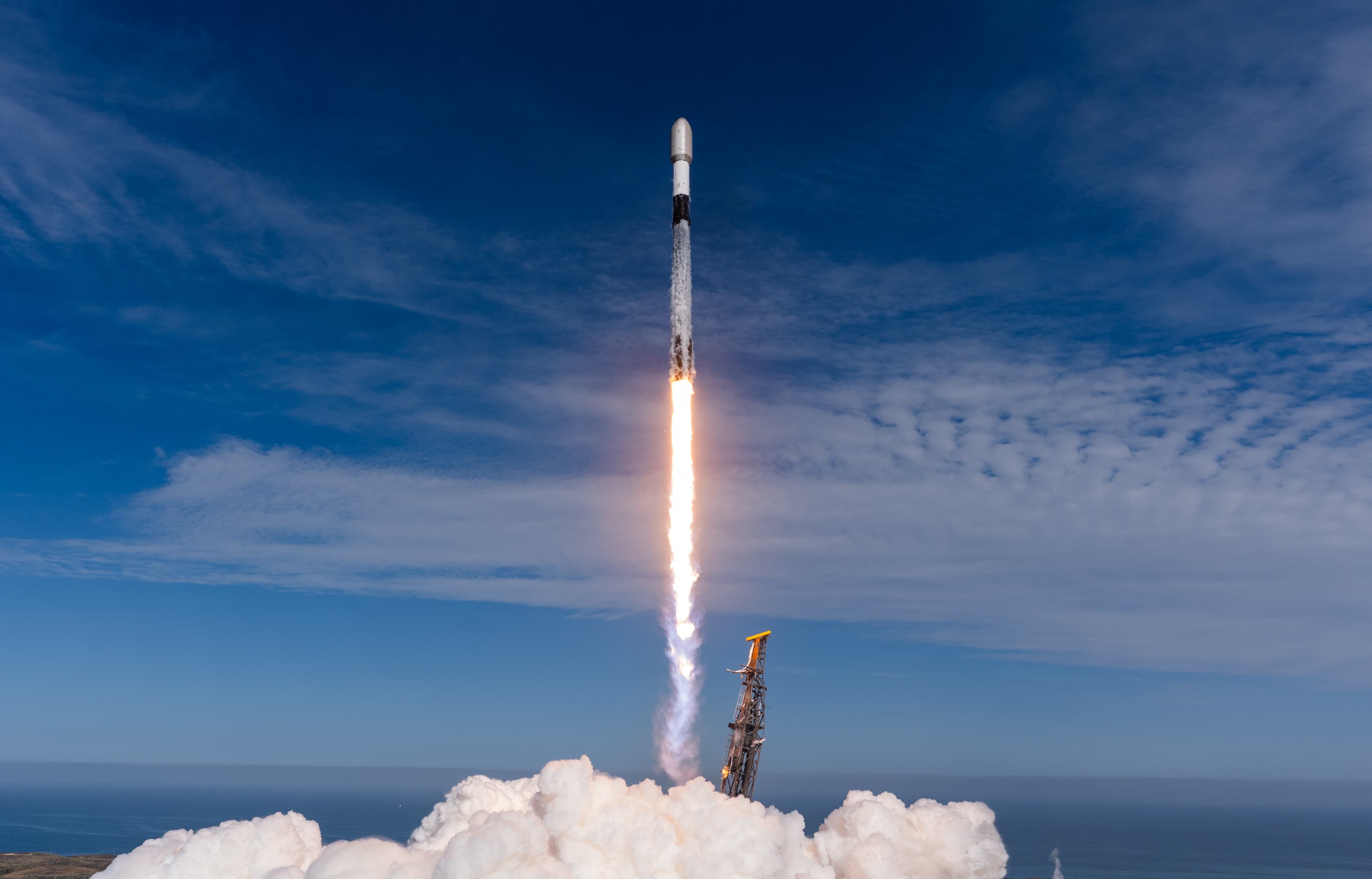
SpaceX experienced one of its shortest launch groundings after a Falcon 9 upper stage anomaly on February 2. The company successfully deployed 25 Starlink satellites from Vandenberg Space Force Base, but the upper stage failed to complete its deorbit burn.
- SpaceX attributed the issue to a gas bubble in the transfer tube preventing the Merlin vacuum engine from re-igniting
- The FAA confirmed on February 5 it would oversee the mishap investigation and approve corrective actions
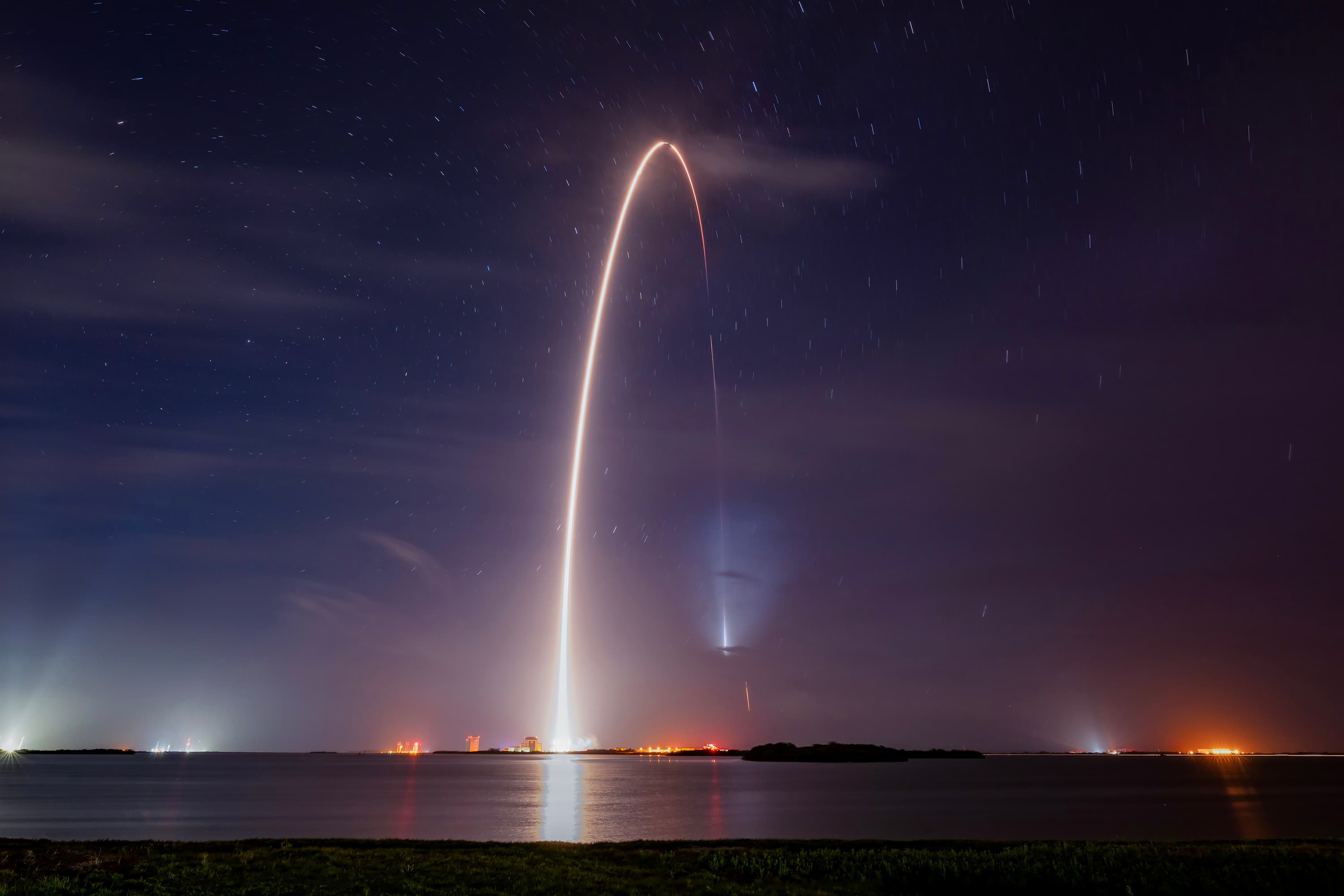
- SpaceX resumed operations just five days later on February 7 with another successful Starlink launch from California
- The company conducted a static fire test on February 8 ahead of the Crew-12 mission to the International Space Station
The rapid turnaround demonstrates SpaceX's operational maturity, though this marks the fourth upper stage issue in approximately 19 months. The timing proved sensitive given NASA's upcoming Crew-12 mission, originally scheduled for February 11, with the ISS operating on reduced crew following a medical evacuation in January.
Space-Based Power Beaming Advances
Ascent Solar Technologies announced on February 5 aggressive plans to accelerate development of space-based energy beaming technology. The Colorado company is advancing thin-film photovoltaic modules designed to receive power transmitted via microwave or laser from orbital platforms.
- NASA collaboration with Marshall and Glenn Research Centers remains on schedule to conclude this spring, validating CIGS modules for space environments
- Ascent's production facility enables delivery in six to eight weeks versus industry standard nine to twelve months
- Partnerships with Cislunar Industries and Star Catcher Industries target spacecraft generating multiple times more power than traditional arrays
- Technology aims at space data centers, in-space manufacturing, and long-duration lunar missions requiring continuous power
The announcement reflects growing recognition that power generation will become an infrastructure bottleneck as orbital operations expand. Traditional solar panels face limitations in cislunar space and during lunar shadow periods. Energy beaming could enable indefinite spacecraft operation without heavy batteries, fundamentally changing mission design.
ULA Reaches Vandenberg
United Launch Alliance achieved a logistics milestone on February 6 when its RocketShip vessel delivered the first Vulcan rocket components to Vandenberg Space Force Base in California, setting up the vehicle's West Coast debut later in 2026.
- The barge transported Vulcan booster and Centaur upper stage from Alabama, traveling 2,642 river miles through the Panama Canal
- Crews worked around tidal swells during several days of offloading operations
- Vandenberg's Space Launch Complex 3 East underwent modifications to accommodate Vulcan's dimensions
- ULA targets late second quarter 2026 for inaugural California flight
The West Coast capability provides operational redundancy and access to polar orbits more easily achieved from California. This marks ULA's first time staging rockets on both coasts simultaneously since November 2022. Meanwhile, at Cape Canaveral, ULA mated the USSF-87 payload to a separate Vulcan carrying Geosynchronous Space Situational Awareness Program satellites. ULA expects to launch 20 to 25 Vulcan missions in 2026.
SpaceX Repositions Historic Launch Pad
SpaceX made a significant strategic announcement on February 6, revealing plans to shift all Dragon spacecraft launches away from Kennedy Space Center's Launch Complex 39A. The decision marks the end of an era for the historic pad that hosted most Apollo and Space Shuttle missions.
- All future Dragon missions, including crewed flights, will launch from Space Launch Complex 40 at Cape Canaveral Space Force Station
- The last Dragon flight from pad 39A occurred with the CRS-33 cargo mission in August 2025
- A massive crane was positioned at the pad on February 4 to begin work on the crew access arm, either for removal or repair
- SpaceX senior mission manager Lee Echerd confirmed the shift allows the company to focus pad 39A exclusively on Falcon Heavy and upcoming Starship operations
The transition enables SpaceX to concentrate resources on preparing pad 39A for Starship launches later in 2026. The FAA publicly released environmental approval documents on January 30 allowing up to 44 Starship launches and 88 landings from the site.