This Week in Space Tech #26
Welcome to This Week in Space Tech (February 9-15, 2026), your weekly guide to the most significant developments in the space industry.
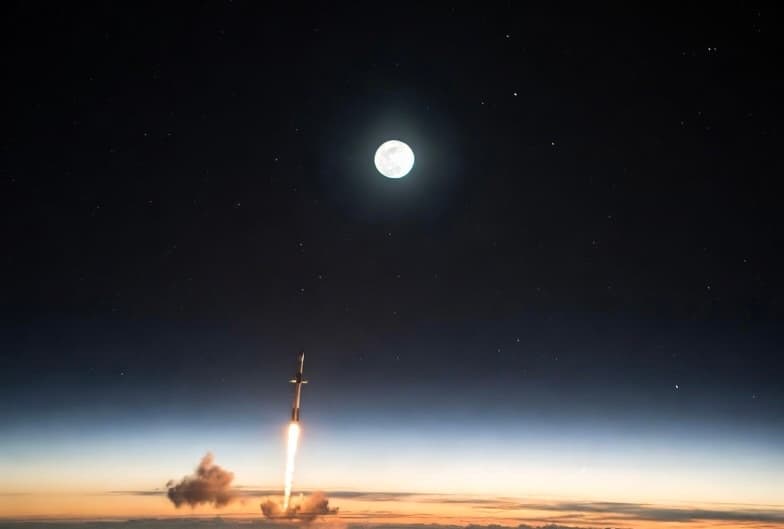
This week delivered a remarkable contrast of triumph and turbulence, with Europe celebrating a major rocket debut, ULA facing renewed technical challenges, and SpaceX marking a historic milestone while successfully returning astronauts to the International Space Station.
Vulcan Hits Another Snag
United Launch Alliance's Vulcan rocket encountered a troubling setback on February 12 when one of its four solid rocket boosters experienced a nozzle burn-through during the USSF-87 mission, echoing a similar problem that plagued an earlier flight. The 202-foot rocket lifted off from Cape Canaveral Space Force Station at 4.22 a.m. EST carrying classified payloads for the Space Force's Geosynchronous Space Situational Awareness Program.
- Visible flames and sparks erupted from one of the Northrop Grumman GEM 63XL solid rocket boosters less than 30 seconds into flight, creating a dramatic shower of debris
- Despite the anomaly, the rocket's core stage and Centaur upper stage compensated for the underperforming booster, successfully delivering payloads directly to geosynchronous orbit approximately 22,000 miles above Earth
- The failure marks the second nozzle burn-through in just four Vulcan flights, with a similar issue occurring during the rocket's second certification flight in October 2024
- ULA interim CEO John Elbon had expressed confidence just days before launch, stating the earlier booster problems were "behind us now"
The recurring booster issues cast doubt on ULA's ambitious 2026 plans to fly 18 to 22 missions, with the company needing to examine its entire inventory of pre-manufactured GEM 63XL boosters. Gary Wentz, ULA's vice president of Atlas and Vulcan programs, acknowledged the problem but emphasized the mission succeeded in placing satellites into their correct orbits. The Space Force confirmed it would work closely with ULA before approving the next Vulcan national security launch.
The timing proves particularly challenging for ULA, which is transitioning away from its Russian-powered Atlas V rockets and attempting to establish Vulcan as a reliable workhorse for both government and commercial customers. The company's backlog stands at more than 80 orders, including 38 flights contracted by Amazon for its Leo satellite constellation.
Europe's Heavy Lift Arrives
In stark contrast to ULA's troubles, Europe celebrated a flawless debut of its most powerful rocket on February 12 when the Ariane 64 successfully placed 32 Amazon Leo satellites into orbit. The launch from French Guiana at 11.45 a.m. EST marked the first flight of the four-booster variant and demonstrated Europe's capability to compete in the burgeoning satellite constellation market.
- The Ariane 64 can place more than 20 metric tons into low Earth orbit, twice the performance of the Ariane 62 variant that flew on previous missions
- The mission used Ariane 6's long fairing configuration for the first time, giving the 62-meter-tall rocket the capacity to accommodate large commercial payloads
- All 32 satellites deployed successfully into a 465-kilometer orbit approximately 1 hour and 54 minutes after liftoff
- The launch initiates a series of 18 Ariane 6 flights contracted by Amazon, representing the largest commercial contract Arianespace has ever signed
European Space Agency officials framed the success as a critical step in recovering from the "launcher crisis" that left Europe unable to launch its own payloads for several years. With both Ariane 62 and Ariane 64 now operational, Europe possesses genuine heavy-lift capability independent of American or Russian systems.
David Cavaillolès, Arianespace's CEO, emphasized the strategic importance for European autonomy in space access. The successful flight positions Arianespace to compete for megaconstellation deployment contracts while European governments push for reduced dependence on SpaceX. Arianespace projects seven to eight Ariane 6 launches in 2026, double last year's cadence.
SpaceX Hits 600 and Delivers Crew
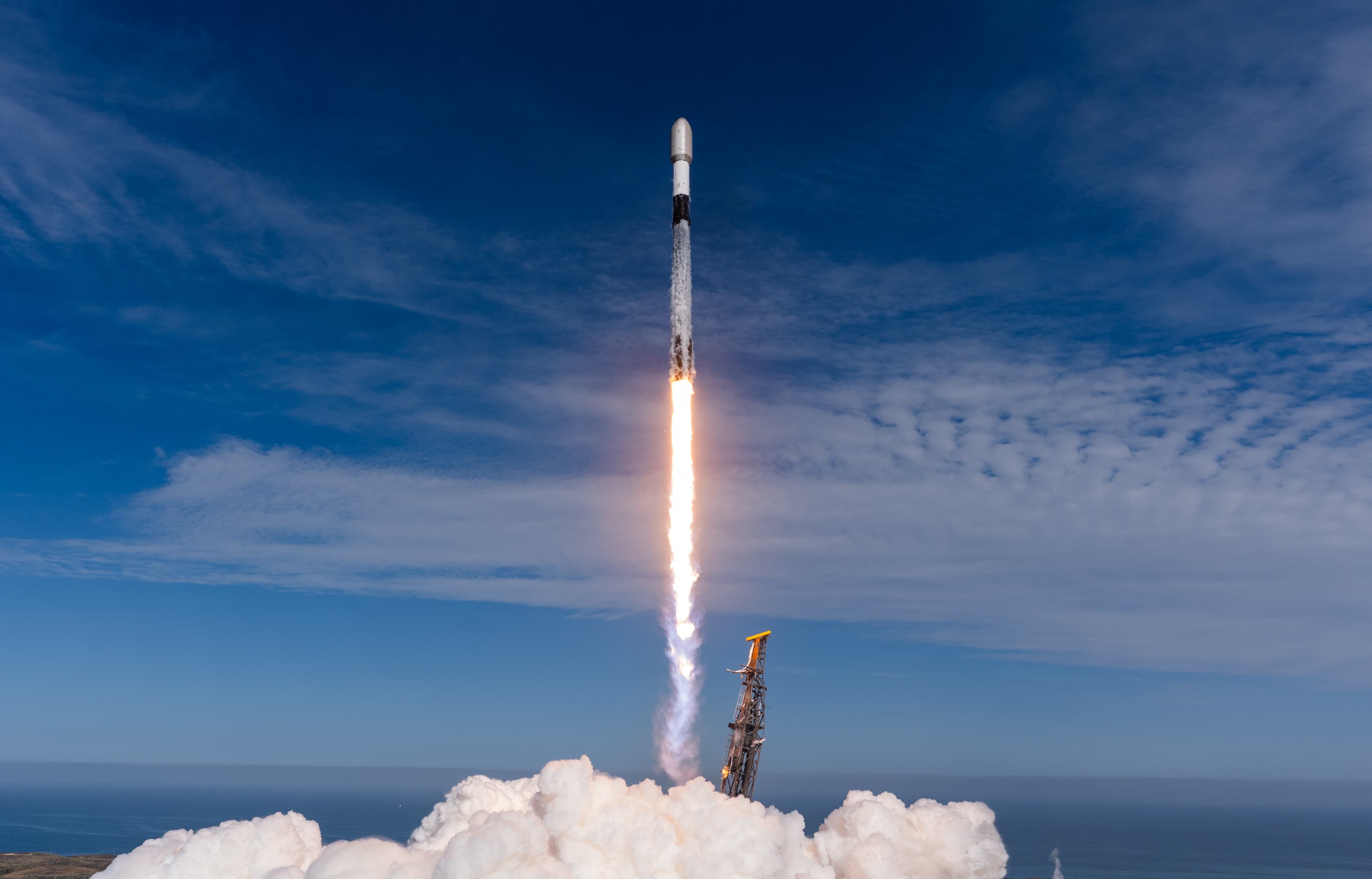
SpaceX marked a historic milestone on February 14 with the launch of its 600th Falcon 9 rocket. The Starlink 17-13 mission lifted off from Vandenberg Space Force Base at 8.59 p.m. EST, deploying 24 internet satellites and successfully landing the veteran first-stage booster on a droneship.
- The mission used booster B1063 on its 31st flight, demonstrating extraordinary reusability SpaceX has achieved
- SpaceX has now placed approximately 9,700 Starlink satellites into orbit, supporting more than 10 million subscribers across 160 countries
- Out of more than 150 Falcon 9 flights in 2025, only eight used new boosters, making reused hardware the overwhelming norm
The milestone came hours after another achievement when Crew Dragon docked at the International Space Station on February 15 at 3.15 p.m. EST. The Crew-12 mission, which launched on Friday the 13th, restored the ISS to its full seven-member crew after an earlier medical evacuation.
NASA astronauts Jessica Meir and Jack Hathaway, ESA astronaut Sophie Adenot, and Roscosmos cosmonaut Andrey Fedyaev will spend approximately six months conducting scientific research. The Friday the 13th launch marked the first time NASA intentionally flew a crewed mission on that date, with Administrator Jared Isaacman calling it a "very lucky day."
Artemis II Test Continues
NASA quietly conducted another fueling test of its Artemis II rocket during the week, loading liquid hydrogen into the Space Launch System without public announcement. The unannounced test followed the earlier wet dress rehearsal that encountered hydrogen leaks and forced postponement of the February launch window.
- Teams successfully loaded liquid hydrogen into the rocket's core stage, testing fixes implemented after earlier leak issues
- NASA continues targeting March for Artemis II, which will send four astronauts on a lunar flyby mission
- The crew remains ready pending resolution of hydrogen leak problems that mirror issues from the 2022 Artemis I preparation
The continued testing reflects NASA's determination to fix issues before committing crew to launch. Each delay extends the gap since humans last ventured beyond low Earth orbit, now stretching past 54 years.