This Week in Space Tech #15
Welcome to This Week in Space Tech, covering 24 to 30 November 2025. Here is what actually moved the needle across launch pads, startups and ministries.
Mega rideshare and new flags in orbit
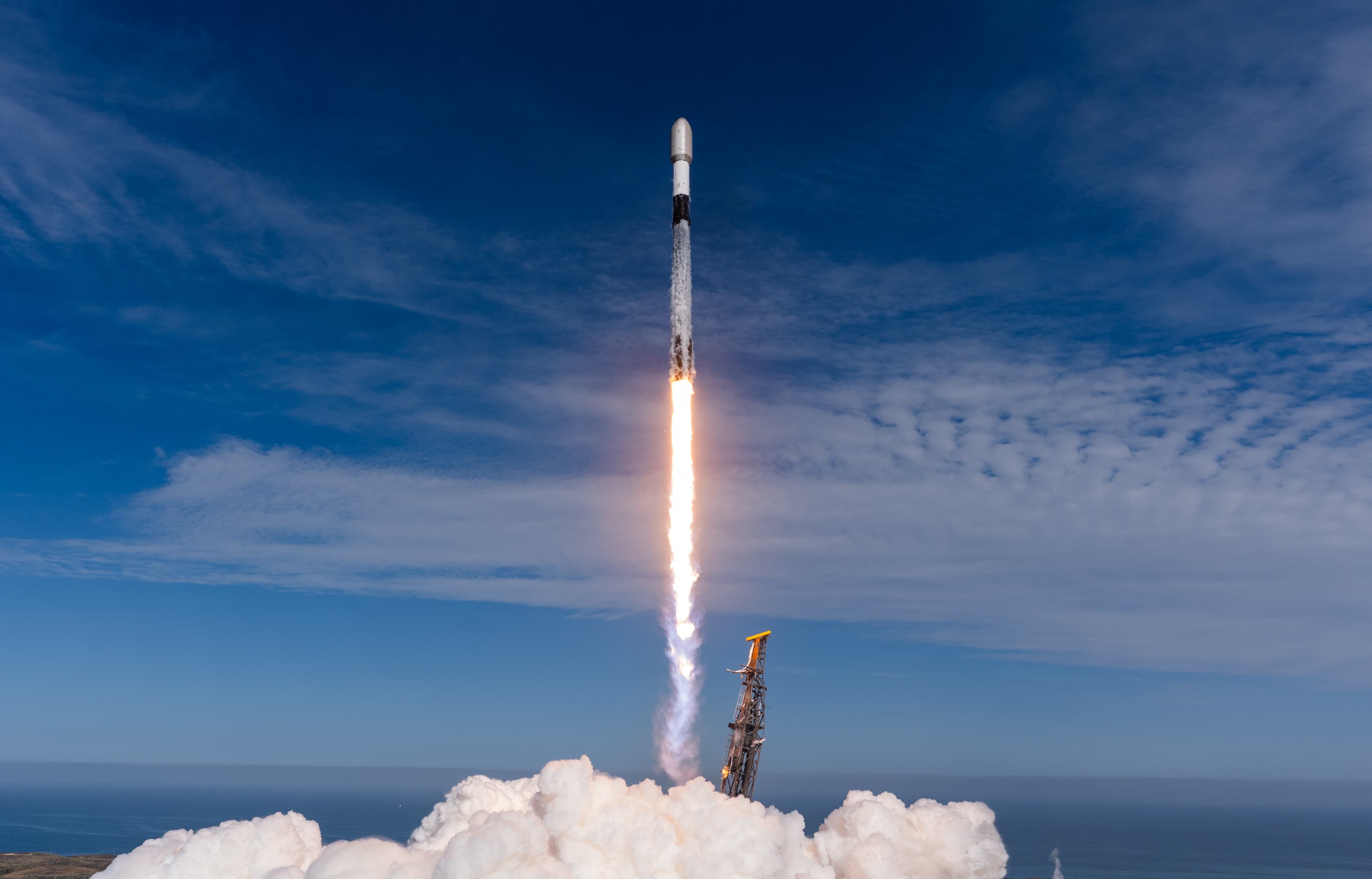
On 28 November, a Falcon 9 from Vandenberg flew SpaceX’s Transporter 15 mission, carrying about 140 payloads to sun synchronous orbit on a single rocket. It is one of the densest rideshare manifests flown so far. The passenger list spanned everything from tech demos to full blown commercial constellations, including Earth observation, Internet of Things, climate missions and national security experiments.
Greece marked a milestone with the first cluster of satellites under its National Microsatellite Program riding on Transporter 15. The set includes MICE 1, a Greek nanosatellite focused on maritime tracking and IoT, and gives the country its first real foothold as a smallsat operator rather than just a customer of foreign imagery.
South Korea’s Nara Space confirmed successful operations on its GyeonggiSat 1, also launched this week, and set out a vision for an eventual 84 satellite imaging constellation, positioning itself as a serious regional data provider.
Companies like ICEYE, Open Cosmos and other familiar names added new spacecraft as well, quietly growing fleets that already feed insurance, agriculture, disaster response and defense customers.
Quantum links and advanced tech in orbit
The SpeQtre satellite, a 12 unit CubeSat built around an entangled photon source, reached orbit on Transporter 15 and began commissioning. It is a joint project between Singapore based SpeQtral and UK partners. SpeQtre will test quantum key distribution links between ground stations in Europe and Asia, a step toward satellite networks that can deliver encryption schemes resistant to future quantum computers.
Europe’s ministerial reset
In Bremen, European ministers agreed a record three year budget for the European Space Agency of roughly 22 billion euro, about a 30 percent jump over the previous cycle. It is the first time ESA has received essentially the full amount it asked for. The package cements a new European Resilience from Space program, an explicitly dual use initiative that will fund a military grade surveillance, navigation and communications layer on top of existing civilian satellites.
Germany emerged as ESA’s largest contributor for the first time, committing around 5 billion euro and tying space firmly into its wider national security strategy that runs to 2030.
Funding also flows to reusable launcher technology, climate missions and planetary exploration, including renewed backing for the Rosalind Franklin Mars rover and studies for a potential Enceladus mission.
Outside Europe, Canada signalled plans to boost its ESA participation, seeing European cooperation as a way to diversify partners in an increasingly tense global space environment.