NASA's Perseverance Rover Pioneers AI-Driven Autonomy on Mars
Perseverance completes its first AI-planned drive and deploys Mars Global Localization, giving the rover GPS-like capabilities on the Red Planet.
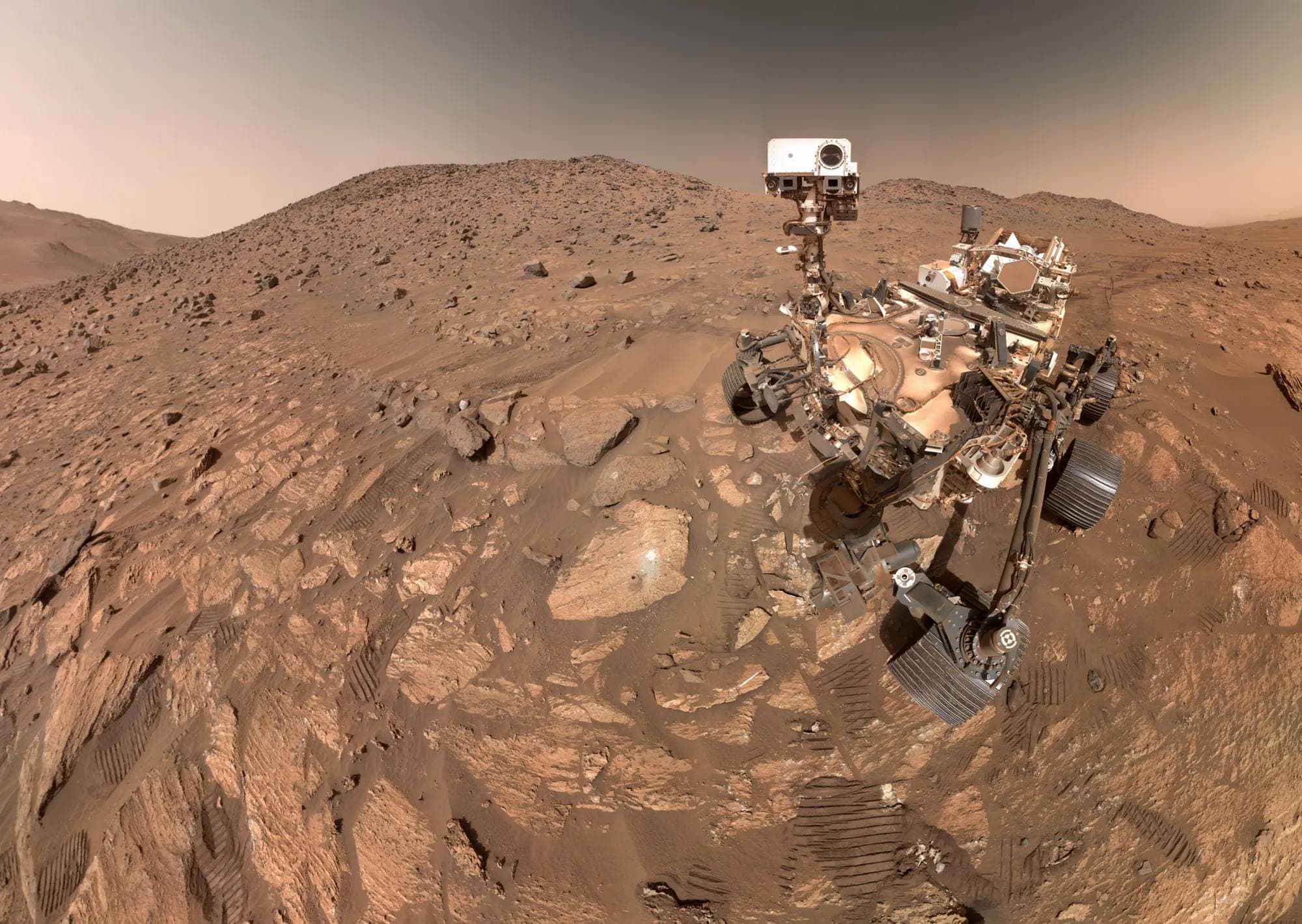
Image: NASA
NASA's Perseverance rover is rewriting the rules of planetary exploration. In a pair of breakthroughs that arrived weeks apart, the rover completed the first drive on Mars planned entirely by artificial intelligence and then deployed a new localization system that lets it pinpoint its position within 25 centimeters - all without calling home to Earth.
Perseverance Rover
LandedMars
|Operating in Jezero Crater since Feb 2021
AI Takes the Wheel on Mars
On December 8, 2025, Perseverance traveled 689 feet (210 meters) along a route charted not by human operators but by a vision-capable AI. Two days later it drove another 807 feet (246 meters), confirming the technology's reliability. The initiative was led by JPL's Rover Operations Center in collaboration with Anthropic, whose Claude AI models analyzed the same orbital images and terrain data that human planners normally use.
The AI identified hazards like rocks and sand ripples, then generated drive commands that were verified through JPL's "digital twin" - a virtual replica of the rover that checked over 500,000 telemetry variables before the instructions were beamed to Mars.
689 ft
First AI Drive
December 8, 2025
807 ft
Second AI Drive
December 10, 2025
500K+
Telemetry Variables
Verified via digital twin
25 cm
Localization Accuracy
Mars Global Localization
Why It Matters
Traditional Mars rover operations require a full planning cycle on Earth for every drive. Each command sequence must be built, reviewed, and uplinked during narrow communication windows. AI-planned routes could compress that timeline dramatically, allowing the rover to cover more ground and reach scientifically valuable targets faster.
Mars Global Localization - GPS Without Satellites
Without a network of GPS satellites orbiting Mars, rovers have historically relied on Earth-based operators to calculate their position. Mars Global Localization changes that entirely.
The algorithm compares panoramic images from Perseverance's navigation cameras against onboard orbital terrain maps. In roughly two minutes, it can determine the rover's location within approximately 10 inches (25 centimeters). During testing against 264 previous rover stops, the system achieved perfect accuracy.
Smartphone Chip, Interplanetary Performance
Mars Global Localization runs on the Helicopter Base Station processor - a commercial chip originally designed for mid-2010s smartphones. Despite its consumer origins, this processor operates more than 100 times faster than Perseverance's main computers, which use radiation-hardened technology dating back to 1997.
The system was first used in regular mission operations on February 2, 2026, and again on February 16. With accurate self-localization, Perseverance can now execute much longer autonomous drives without waiting for Earth to confirm its position.
Perseverance Autonomy Milestones
Dec 8, 2025
First AI-Planned Drive
689 feet driven using an AI-generated route
Dec 10, 2025
Second AI-Planned Drive
807 feet driven, confirming AI reliability
Feb 2, 2026
Mars Global Localization Deployed
First operational use of autonomous self-localization
Feb 16, 2026
Second Localization Use
System confirmed in regular mission operations
A More Independent Explorer
Together, these two technologies represent a fundamental shift in how robots explore other worlds. AI-planned routing eliminates the bottleneck of human drive planning, while Mars Global Localization removes the position uncertainty that previously capped how far the rover could travel between check-ins.
For future missions to Mars and beyond, the implications are significant. Rovers operating in deep space face communication delays measured in minutes or even hours. The more decisions a spacecraft can make on its own - where it is, where to go, how to get there safely - the more science it can accomplish. Perseverance is proving that the building blocks for truly autonomous planetary exploration are no longer theoretical. They are driving across Mars right now.