This Week in Space Tech #34
Welcome to This Week in Space Tech. This edition covers April 6 through April 12, 2026.
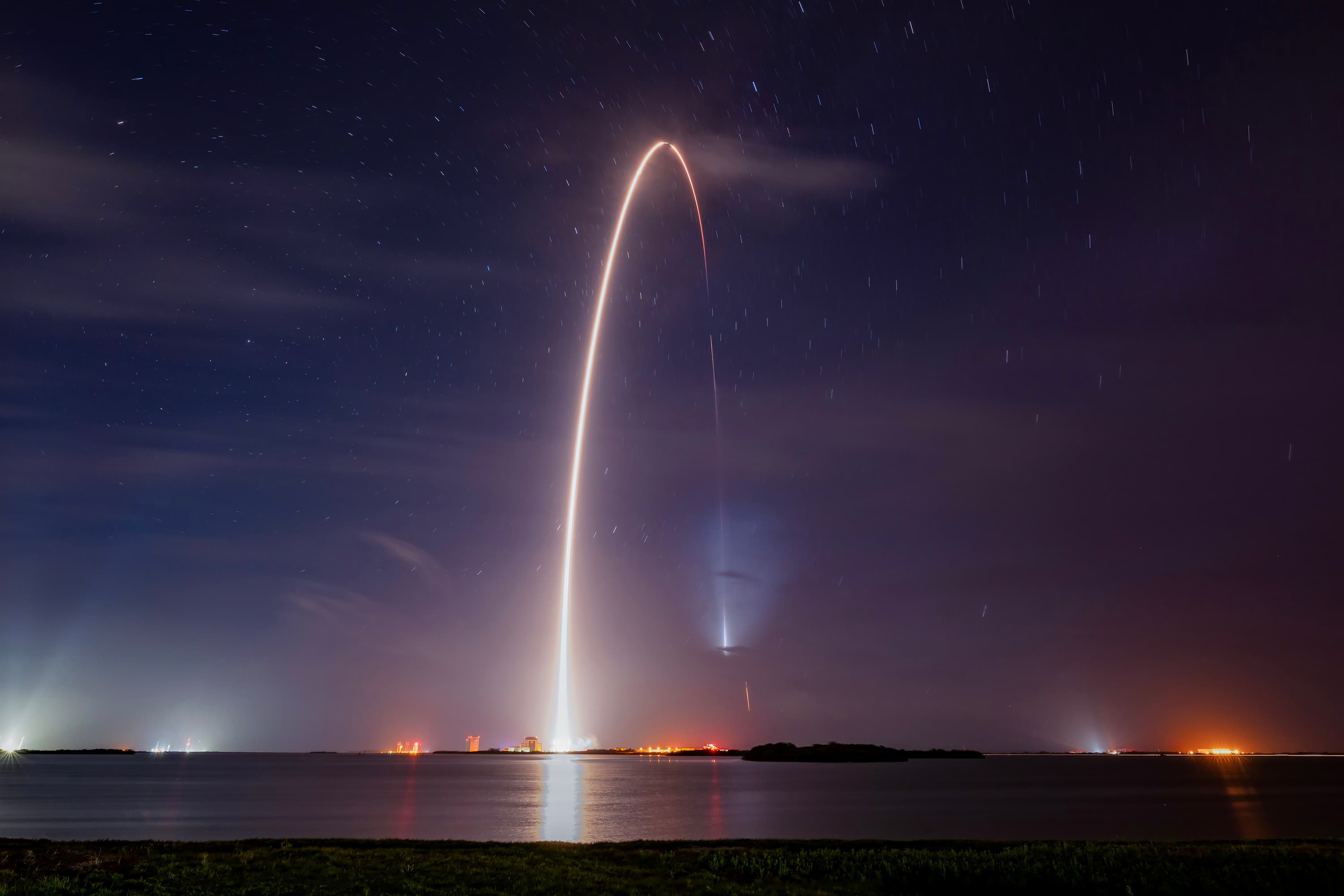
Image: SpaceX
A week that ended with four astronauts back on Earth after traveling farther from home than any human being in recorded history. The Artemis 2 mission dominated, as it should, but it was not the only story. ESA's Celeste satellites sent their first signals from orbit. Northrop Grumman got a fresh cargo run to the station in the air. And SpaceX quietly returned the world's most ambitious rocket hardware to its launch pad.
Artemis 2 Flies Around the Moon and Comes Home
Everything the Artemis program was built toward came into focus this week, across five days that will be in the history books permanently.
- On the evening of Monday, April 6, the Orion spacecraft reached its closest approach to the Moon: 4,067 miles above the far-side surface. At that moment the crew was traveling at roughly 60,000 miles per hour relative to Earth, and they became the first humans to observe parts of the Moon's far side with their own eyes. The Apollo astronauts, flying different trajectories with tighter timing constraints, never had the geometry for it. At 23.02 UTC, Orion hit its maximum distance from Earth: 252,756 miles, eclipsing the record set by the Apollo 13 crew in 1970 by 4,101 miles. Commander Reid Wiseman, pilot Victor Glover, mission specialist Christina Koch, and CSA astronaut Jeremy Hansen became the four farthest-traveling humans in history.
- The flyby itself lasted approximately seven hours. During a planned 40-minute communications blackout as Orion passed behind the Moon, the crew watched an Earthset and then an Earthrise. The crew also experienced a solar eclipse as the Moon moved between Orion and the Sun, giving them an unobstructed view of the solar corona. They collected more than 7,000 images of the lunar surface and captured color variations across the terrain, including contrasts along the terminator line where shadows reveal topography in ways impossible to see from orbit or Earth. Wiseman noted seeing Mars in the planetary train that appeared during the eclipse. In a live call with President Trump shortly after emerging from behind the Moon, Koch said she was not ready to go home.
- On Friday, April 10, the crew was very much ready to go home. At 8.07 p.m. EDT, Orion splashed down in the Pacific Ocean off the coast of San Diego, completing a 694,481-mile journey. The capsule hit the atmosphere at 35 times the speed of sound and slowed to about 20 miles per hour by the time its three main parachutes brought it to the water. The crew was in high spirits during extraction, taking selfies with the medical team inside the capsule before being lifted by helicopter to the USS John P. Murtha. All four crew members were confirmed healthy. Post-splashdown briefings identified a handful of hardware items requiring attention before Artemis III: a valve in the service module, the cabin temperature control system, the toilet fan, and early data from the heat shield that engineers will analyze carefully in the coming weeks.
ESA's Celeste Satellites Send First Navigation Signal From Low Earth Orbit
On the morning of Wednesday, April 8, eleven days after launch, ESA's new navigation demonstrators made history in a quiet lab in the Netherlands.
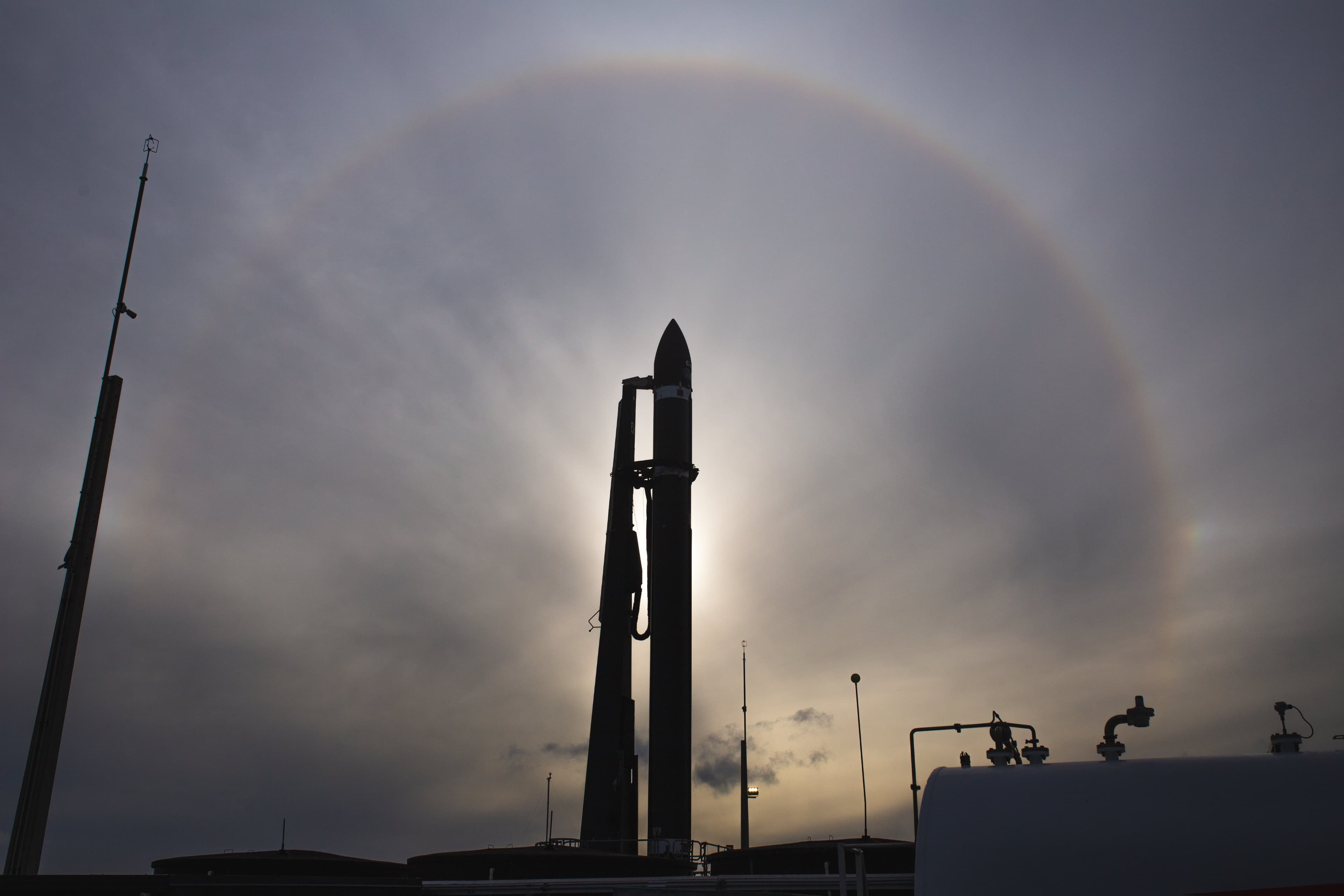
- At 10.38 a.m. Central European Time, the antenna on the roof of ESA's Navigation Lab at ESTEC in Noordwijk received the first navigation signal ever transmitted by a European satellite in low Earth orbit. It came from Celeste IOD-1, one of the two cubesat-scale pathfinder spacecraft launched March 28 on a Rocket Lab Electron from New Zealand. The signal was a dual-frequency navigation message in the L- and S-bands, the first of its kind from any European satellite.
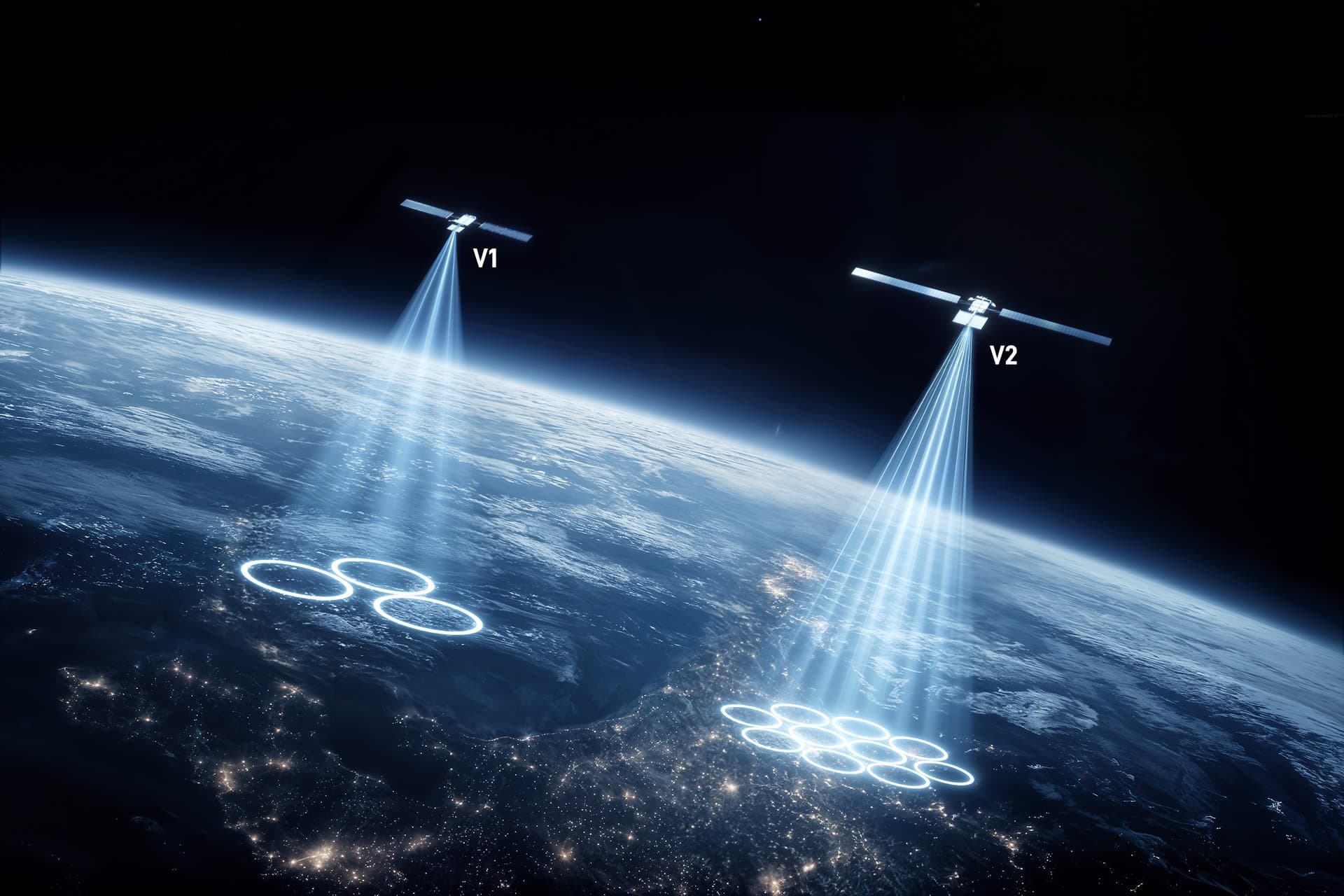
- The significance goes beyond symbolism. Navigation signals from LEO are physically stronger than those from medium Earth orbit because the satellites are closer to the ground. They are also harder to jam, arrive with lower latency, and add geometric diversity to existing positioning systems. If the technology validates, it could underpin a European navigation layer in low Earth orbit that complements Galileo without replacing it.
- The signal also locks in ESA's frequency filings with the International Telecommunication Union before competitors can claim those allocations. Celeste IOD-2, built by the Thales Alenia Space consortium, was expected to transmit its own first signals within days. The full Celeste demonstration constellation of 11 satellites is targeting completion around 2027.
Northrop Grumman Launches Cygnus XL to the Station
While the nation was watching Orion return, another cargo spacecraft was already on its way up.
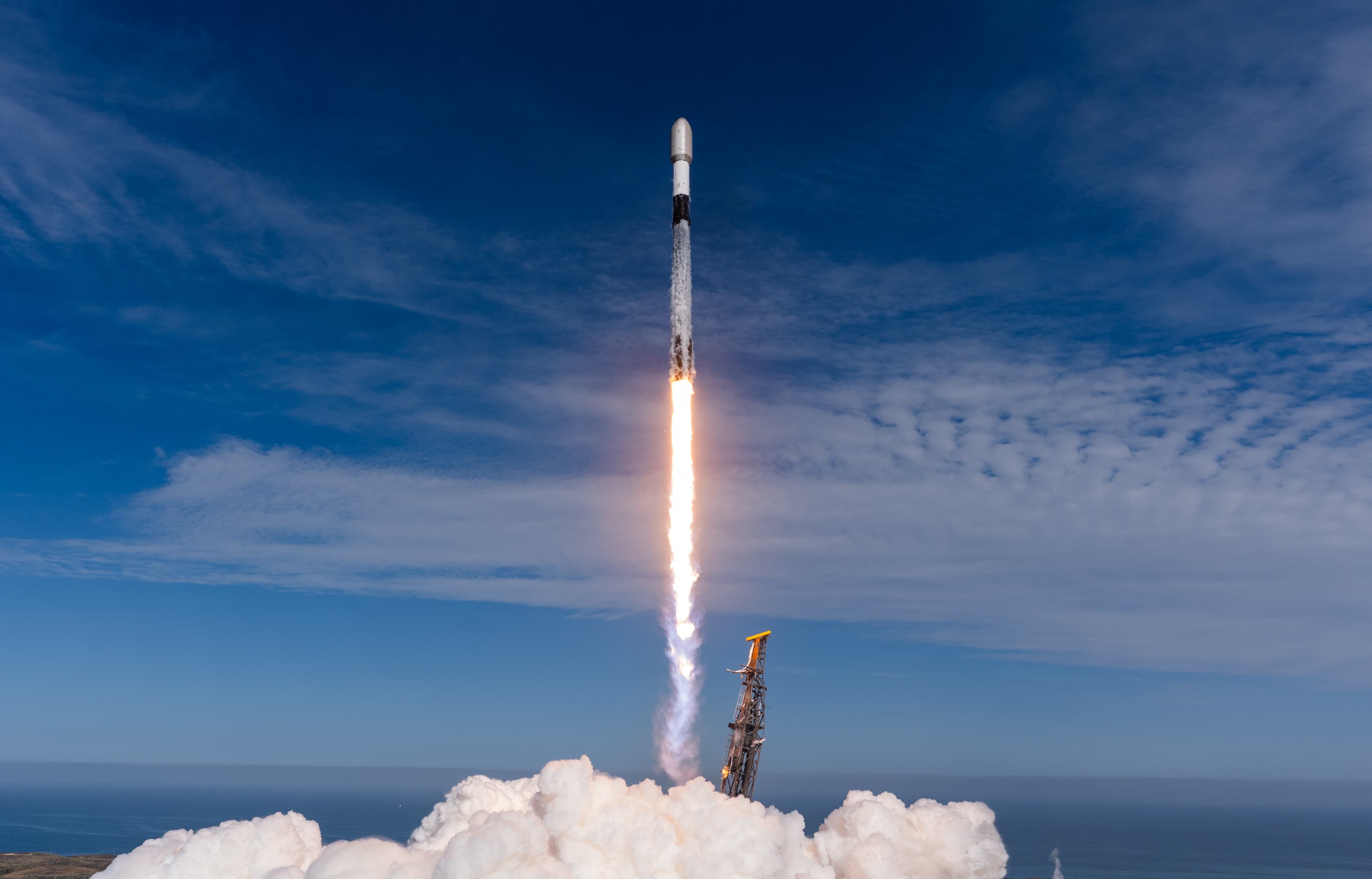
- A Falcon 9 rocket lifted off from Space Launch Complex 40 at Cape Canaveral at 7.41 a.m. EDT on Saturday, April 11, carrying the second Cygnus XL spacecraft: the S.S. Steven R. Nagel, named for the NASA astronaut and space shuttle commander who logged 723 hours over four missions. The booster was on its seventh flight and returned to a landing at Cape Canaveral roughly eight minutes after launch.
- The Cygnus XL configuration, which debuted on NG-23 in September 2025, carries 33 percent more pressurized cargo than earlier Cygnus variants. This flight delivered approximately 11,000 pounds of cargo: scientific experiments, crew provisions, ISS hardware, and technology demonstrations. Highlights among the science cargo included an upgrade module for the Cold Atom Laboratory, biological research hardware, and the ClimCam payload, a climate imaging camera developed jointly by the Kenyan, Egyptian, and Ugandan national space agencies for attachment to the ISS Columbus external platform.
- Cygnus was expected to reach the station on Monday, April 13, where it would be grappled by the Canadarm2 robotic arm. Once berthed, the crew will unload the cargo over several weeks. The spacecraft will eventually be packed with waste and released for a destructive re-entry over the ocean, likely in late 2026.
SpaceX Returns Booster 19 to the Pad
With Artemis 2 complete and attention shifting to what comes next, SpaceX moved its largest rocket hardware back into position for the program's most consequential test.
- Booster 19, the Super Heavy first stage for Starship Flight 12, rolled back out to Pad 2 at Starbase, Texas on April 11, carrying its full complement of 33 Raptor 3 engines for the first time. Engine installation had been completed by early April, following the partial 10-engine static fire on March 16 that ended early due to a ground support equipment issue.
- The return to Pad 2 set the stage for a full 33-engine static fire, the final major ground milestone before Flight 12 can be cleared for launch. At the same time, Ship 39, the matching V3 upper stage, was being prepared for its own static fire campaign at the separate Massey's Outpost test stand, where a new steel truss structure was built specifically to hold the upper stage during engine testing.
- Elon Musk had publicly stated earlier in April that Flight 12 was approximately four to six weeks away. That timeline pointed to a May launch for the most powerful rocket variant in history, carrying implications not only for SpaceX's Starship program but for NASA's Artemis IV crewed landing mission, which depends on a flight-proven V3 Starship as its human landing system. With Artemis 2 complete, the pressure on Flight 12 to proceed without major delays has never been higher.
Xoople Closes $130 Million to Build AI-Focused Earth Observation Constellation
Away from the launch pads, the commercial space startup sector added a notable entry on Monday, April 6.
- Xoople, a Spanish geospatial data company, announced the close of a $130 million Series B round led by Nazca Capital, with participation from MCH Private Equity, Spain's government-backed innovation agency CDTI, Buenavista Equity Partners, and Endeavor Catalyst. The funding brings Xoople's total raised to $225 million and pushed its valuation into what its CEO described as unicorn territory.
- Xoople is building a satellite constellation and integrated ground processing network designed specifically to produce imagery formatted for machine learning pipelines. Unlike traditional Earth observation providers that deliver raw or minimally processed data, Xoople's platform generates curated, labeled, and cloud-integrated datasets for enterprise and government AI applications, with integrations already in place with Microsoft Azure and Google Cloud.
- The round lands Xoople in competition with Planet Labs, BlackSky, and a growing number of European EO startups that are racing to serve the surge in demand for geospatial intelligence from defense, climate, agriculture, and infrastructure monitoring customers. The Spanish government's CDTI participation signals continued European investment in sovereign space data capability, independent of any single American or Chinese provider.