This Week in Space Tech #32
Welcome to This Week in Space Tech. This edition covers March 23 through March 29, 2026.
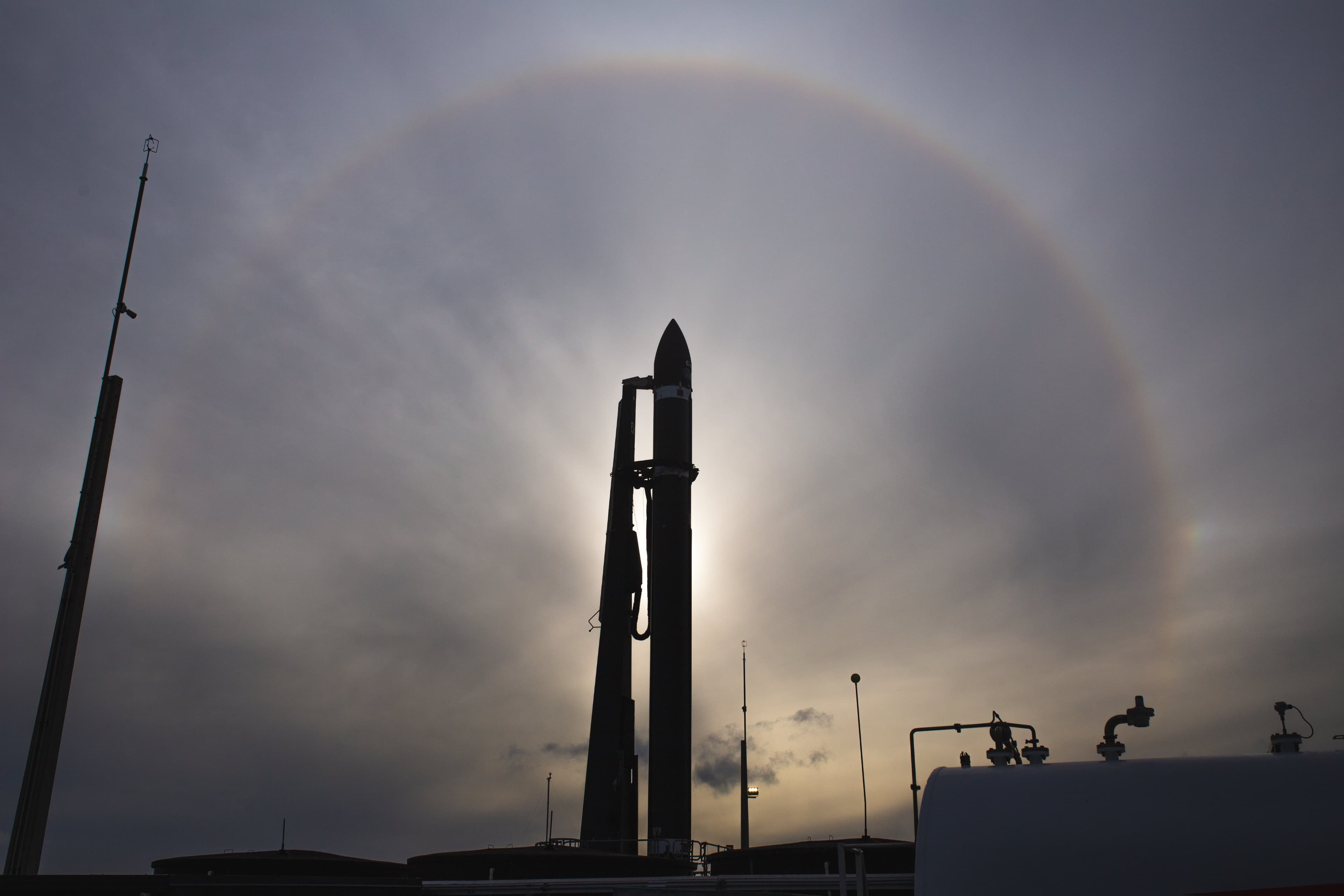
Image: Rocket Lab
A week shaped by sweeping policy ambition from NASA, a last-second scrub in Norway, and a quiet but meaningful launch from New Zealand that quietly advanced Europe's own positioning ambitions. In the background, SpaceX kept wiring together the most powerful rocket ever built.
NASA Drops Its Biggest Agenda Yet at "Ignition"
Tuesday, March 24, was one of the densest news days NASA has had in years. The agency held an all-day event it called "Ignition" at its Mary W. Jackson headquarters in Washington, using the occasion to announce a string of major program decisions that will shape American spaceflight for the rest of the decade.
- The most structurally significant announcement was the formal decision to pause development of the Lunar Gateway space station indefinitely. NASA Administrator Jared Isaacman said the agency would redirect those resources toward establishing a permanent crewed lunar base, a phased program starting with robotic infrastructure deliveries and expanding eventually to semi-habitable facilities near the lunar south pole. Beyond Artemis V, NASA said it would rely on commercially procured and reusable hardware for crewed lunar surface missions, initially targeting a landing cadence of once every six months, with ambitions to increase that over time.
- The most striking single announcement came in the area of propulsion. NASA confirmed that it will launch Space Reactor-1 Freedom, described as the first nuclear-powered interplanetary spacecraft, to Mars before the end of 2028. The spacecraft will test advanced nuclear electric propulsion in deep space, a technology NASA says is essential for any serious human Mars mission. The nuclear power program is a partnership with the U.S. Department of Energy.
- On the science side, NASA Associate Administrator Nicola Fox confirmed the Nancy Grace Roman Space Telescope is ahead of schedule and under budget ahead of its 2026 launch. NASA also opened a new competitive solicitation for science payloads on upcoming Commercial Lunar Payload Services missions, and issued a Request for Information asking commercial providers to propose architectures for regular crewed lunar transport capable of supporting a permanent lunar base, in direct response to an executive order on American space supremacy issued in December 2025.
Isar Aerospace's Spectrum Reaches T-Minus 3 Before Abort
March 25 was a near-miss for European spaceflight history, and it played out at the worst possible moment in the countdown.
- Isar Aerospace had its Spectrum rocket loaded and ready at Andøya Spaceport in northern Norway for the "Onward and Upward" mission, the second flight of the vehicle and its first attempt to carry real payloads to orbit. A successful orbital insertion would have made Spectrum the first rocket ever to reach orbit from European soil, something no private or national vehicle has achieved from the continent.
- The countdown proceeded all the way to T-minus 3 seconds, just before engine ignition, when an automated abort fired. The cause was a rogue boat that had entered the hazard exclusion zone in the ocean downrange. By the time range safety teams cleared the vessel and the countdown was reset, the available launch window had expired. Isar confirmed the scrub and said propellant temperatures had also risen during the unexpected hold, creating an additional technical consideration. No new launch date was announced.
- For context, this attempt had already been delayed multiple times: originally targeting January 21, it was pushed due to a faulty pressurization valve, then pushed repeatedly through February and March due to weather. The payloads aboard include five cubesats from European universities and a technology demonstration experiment from Dcubed. The mission is supported by ESA's Boost! program and is part of Europe's broader push to develop sovereign orbital launch capability in advance of the 2027 deadline set by the European Launcher Challenge.
Rocket Lab Sends Europe's First LEO Navigation Satellites to Orbit
March 28 delivered the week's clean success story, a launch from New Zealand's Mahia Peninsula that carried genuinely historic cargo for European navigation.
- An Electron rocket named "Daughter of the Stars" lifted off from Rocket Lab's Launch Complex on March 28, carrying the first two satellites of ESA's Celeste constellation into a quasi-polar orbit. The launch had originally been scheduled for March 25, but was scrubbed due to cloud and lightning conditions over the pad before it was rescheduled three days later.
- Celeste is ESA's first-ever initiative for satellite navigation in low Earth orbit. The two demonstration spacecraft, designated IOD-1 and IOD-2, were developed by two competing European consortia: one led by GMV of Spain, the other led by Thales Alenia Space of France. Their mission is to test new navigation signal technologies on L-band and S-band frequencies, validate that a LEO navigation layer can meaningfully complement the existing Galileo system operating in medium Earth orbit, and secure assigned frequency filings before competitors claim them.
- The significance of the mission extends beyond the two small cubesats in orbit. If LEO-PNT technology proves out, it opens the door to a European navigation constellation that is harder to jam, offers lower latency signals closer to the Earth's surface, and provides resilient backup capability independent of any single orbital shell. This was also the first time Rocket Lab has launched a mission for ESA directly, extending its European footprint and underlining its position as a go-to provider for institutional small satellite customers worldwide.
SpaceX Keeps Building Toward Flight 12
With Booster 19 back in the Mega Bay at Starbase after the initial 10-engine static fire ended early on March 16 due to a ground support equipment issue, the week of March 23 through 29 was spent installing the remaining 23 Raptor 3 engines on the booster in preparation for a full 33-engine static fire, the final major hardware test before the vehicle can be cleared for launch.
- SpaceX publicly confirmed that 23 additional engines still needed to be installed as of the week following the partial static fire, putting the full-scale test likely in early to mid-April. Ship 39, the matching V3 upper stage, was also progressing through its own engine installation ahead of a separate static fire at the Massey test site.
- Flight 12 remains the most consequential test in the Starship program's history. It will be the first flight of the V3 architecture, the first launch from Pad 2, and the first time 33 Raptor 3 engines have burned together for a full flight duration. The program was originally targeting a March launch, but the timeline has shifted to April or later as testing has taken more time than initially planned. Given the scale of what is being validated, the deliberate pace reflects experience more than setback.
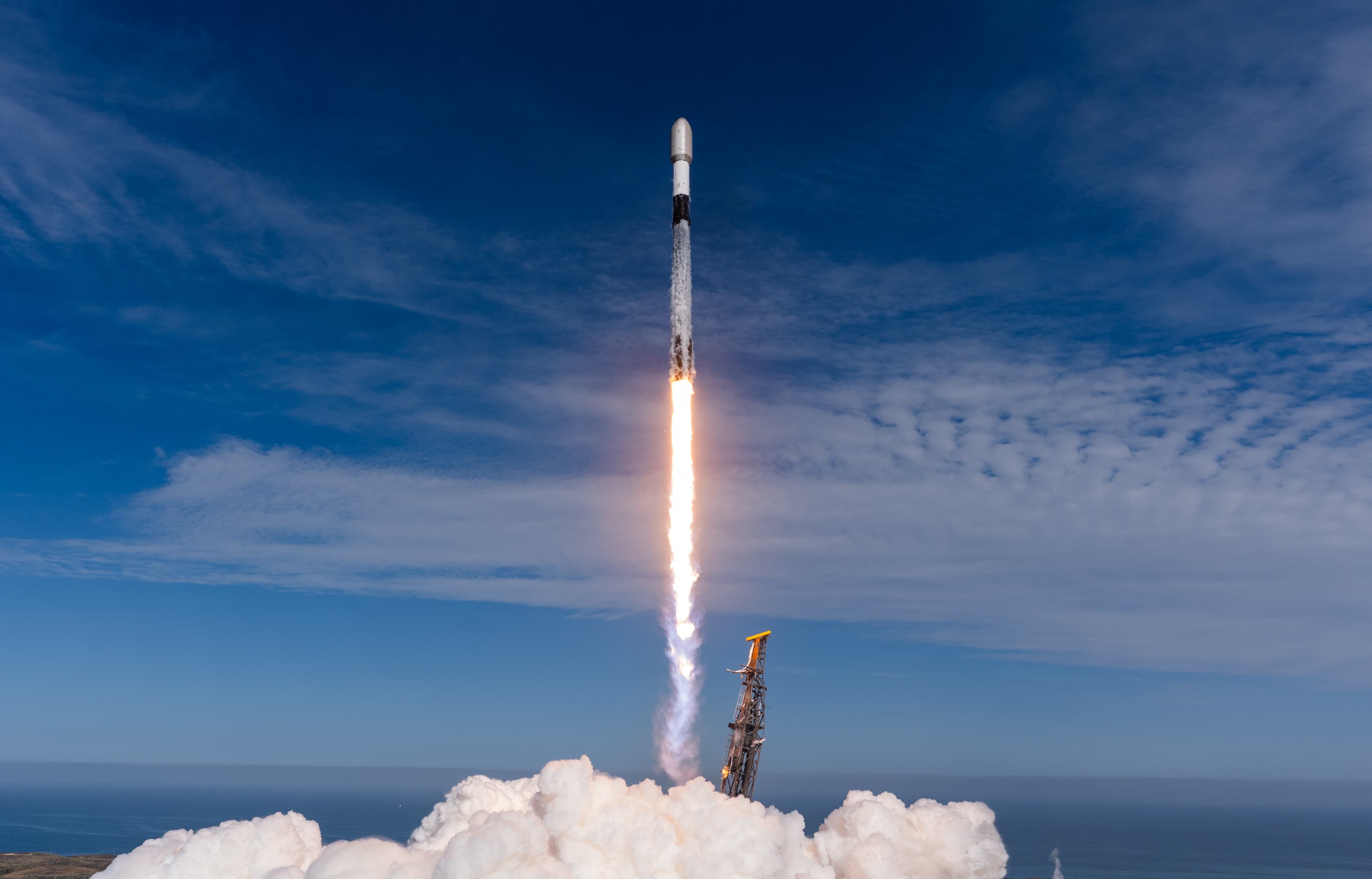
- On the Falcon 9 side, SpaceX launched another Starlink batch on March 26 from Vandenberg, keeping its 2026 cadence averaging better than one launch every two and a half days.