This Week in Space Tech #29
Welcome to This Week in Space Tech. This edition covers March 2 through March 8, 2026, a week that delivered enormous momentum across every corner of the industry.
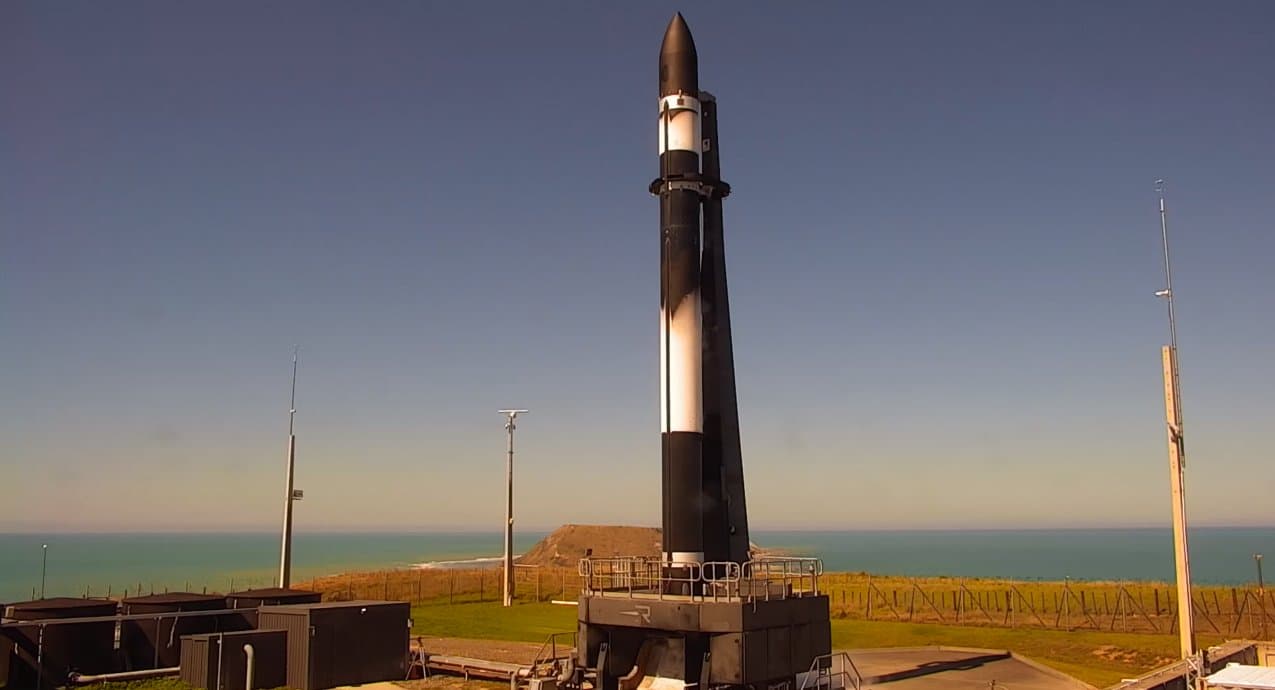
Image: Rocket Lab
Starship's most capable vehicle yet moved to its launch pad, JAXA's next-generation freighter departed the space station, two major commercial space companies raised a combined billion dollars in a single day, and Rocket Lab quietly chalked up its 83rd mission in a launch cadence that continues to impress.
Starship Flight 12 Hardware Converges at Starbase
The clearest sign yet that Starship Flight 12 is genuinely close came in the final days of the week, as SpaceX moved both of its V3 vehicles through critical test milestones and onto the launch site.
- On March 4, Ship 39, the first-ever V3 Starship upper stage, successfully completed a series of cryogenic proof tests at the Massey Outpost test facility at Starbase. The tests, which fill the vehicle's propellant tanks with cryogenic fluid to verify structural integrity under operational loads, confirmed that the substantially redesigned V3 airframe behaves as expected. Ship 39 features a new heat shield configuration, redesigned flaps, and catch-point hardware for future mechanical catch attempts.
- On the night of March 7, Super Heavy Booster 19 was transported from the production facility and installed on the Orbital Launch Mount at Pad 2, the new second launch complex at Starbase that has never previously hosted a Starship vehicle. The booster arrived loaded with all 33 Raptor 3 engines. A road closure filed for March 8 strongly indicated that a full static fire test, which will ignite all 33 engines simultaneously while the booster remains tethered to the pad, was imminent. A clean static fire would clear the path for Ship 39 to be stacked on top and the integrated vehicle to proceed toward a launch license from the FAA.
- Booster 19 represents a significant step up from earlier Super Heavy variants. Each Raptor 3 engine delivers roughly 22 percent more thrust than the Raptor 2 units used on previous flights. With Pad 2 validated and now active, SpaceX has effectively doubled its Starship launch throughput capacity, a structural change for a program that had previously been bottlenecked by single-pad operations.
JAXA's HTV-X1 Leaves the Station After Four Months
March 6 brought the end of a milestone mission for Japan's next-generation cargo spacecraft.
- At exactly 12 p.m. Eastern time on March 6, Japan's HTV-X1 freighter was released from the International Space Station's Canadarm2 robotic arm and departed the station after a four-month stay. It was the first flight of the new HTV-X class of cargo vehicle, a major upgrade over the original HTV design that Japan operated for years before retiring it. HTV-X1 had arrived at the station on October 29, 2025, after launching on Japan's H3 rocket from Tanegashima Space Center.
- The vehicle delivered over 9,000 pounds of supplies, scientific investigations, and hardware to the station during its stay. Among the more unusual payloads carried on this first mission: sake fermentation equipment from the Japanese craft brewery Dassai, and rice seeds from Saitama Prefecture that will be returned to Earth for cultivation in a local education project.
- Following departure, HTV-X1 will not immediately reenter. The spacecraft is designed to remain in orbit for approximately three months after undocking, serving as an independent orbital platform for JAXA technology demonstrations. These include a laser ranging experiment called Mt.FUJI, a lightweight deployable antenna system for future space solar power research, and the deployment of a small cubesat from a higher altitude than the ISS, which extends the satellite's operational lifetime by reducing atmospheric drag.
A Billion-Dollar Day for Commercial Space Infrastructure
March 5 was an unusually significant day for space investment, with two major funding rounds closing within hours of each other and a third major deal confirmed the same week.
- Vast, the Long Beach-based startup building the Haven line of commercial space stations, announced it had raised $500 million in new financing. The round consisted of $300 million in Series A equity led by Balerion Space Ventures, plus $200 million in venture debt. Investors included In-Q-Tel, the Qatar Investment Authority, Mitsui, MUFG, and Nikon, among others. CEO Max Haot said the LEO economy is at an inflection point, and the funds will be used to accelerate construction of Haven-1 and future follow-on stations. NASA has already signed an order for the sixth private astronaut mission to the ISS, to be followed eventually by a private crewed mission to Haven-1 itself, targeted no earlier than summer 2027.
- Also on March 5, Spanish launch startup PLD Space announced the close of a $209 million Series C round. Mitsubishi Electric led the round with a $58 million investment, securing priority access to future launches in exchange. PLD Space is developing the Miura 5 small orbital rocket, a reusable vehicle targeting a debut launch in 2026. The company also has longer-term plans for the larger Miura Next booster. PLD became the first private Spanish company to reach space with the suborbital Miura 1 in 2023, and this round is intended to build out manufacturing capacity for an orbital flight rate.
- Sierra Space, the Louisville, Colorado-based developer of satellites, spacecraft components, and the Dream Chaser spaceplane, closed a $550 million equity round led by LuminArx Capital Management. The deal sets an $8 billion valuation for the five-year-old company. Sierra Space's business spans both commercial and government customers and includes contracts with the U.S. Space Force, NASA, and several international agencies.
Rocket Lab Completes Two Launches From Two Countries in Six Days
Rocket Lab continued its aggressive 2026 launch cadence with its 83rd Electron mission of the program, completed just days after a separate launch from a different continent.
- On March 5 (March 6 local New Zealand time), an Electron rocket lifted off from Rocket Lab's Launch Complex 1 at Mahia Peninsula and deployed a single satellite to a 470-kilometer low-Earth orbit for a confidential commercial customer. The mission, given the name "Insight At Speed Is A Friend Indeed," was announced only hours before liftoff.
- The New Zealand launch came just six days after a separate Rocket Lab HASTE suborbital mission launched from Wallops Island, Virginia, on February 27. That mission, called Cassowary Vex, flew a hypersonic test platform for the Department of Defense's Defense Innovation Unit. Two successful launches from two different countries within a single week underscores the operational depth Rocket Lab has built across its multi-site launch infrastructure.